

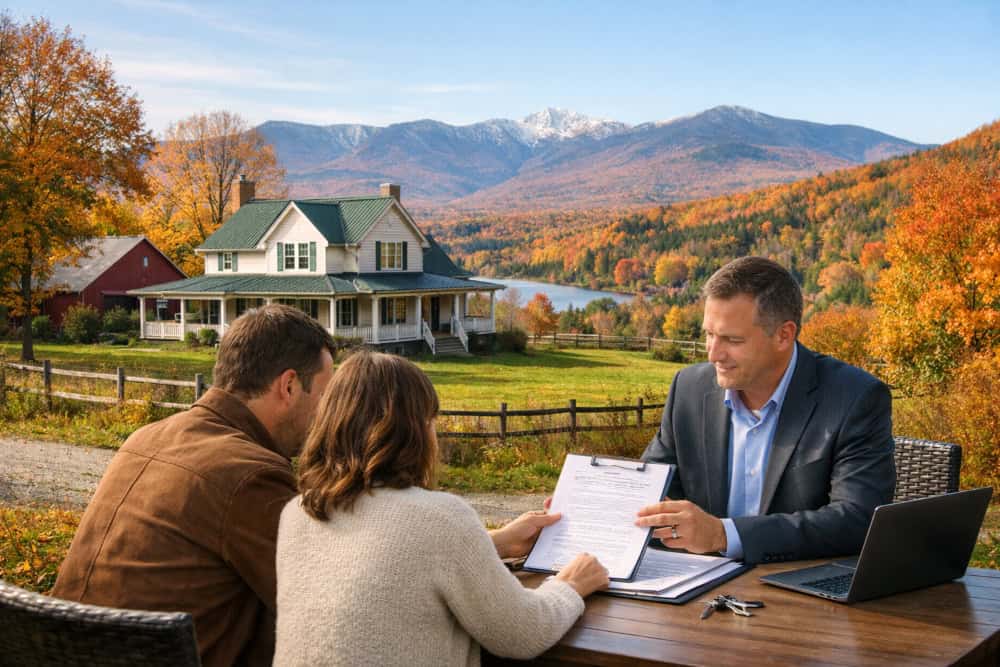
Buying a home in Vermont involves several important steps, from preparing your finances to completing the closing process. Understanding how the process works can help buyers make informed decisions and navigate each stage with confidence.
This step-by-step guide explains what to expect when purchasing a home in Vermont, including mortgage preparation, property searches, inspections, and closing requirements.
Step 1: Evaluate Your Budget and Financing Options
Before starting a home search, most buyers begin by reviewing their financial situation and exploring mortgage options.
Key factors to consider include:
- Estimated purchase price range
- Down payment amount
- Monthly mortgage payment
- Property taxes and insurance
- Closing costs
Mortgage lenders typically evaluate:
- Credit history
- Income and employment verification
- Debt-to-income ratio
- Available savings
Many Vermont buyers explore loan programs such as conventional mortgages, FHA loans, VA loans, or USDA rural development loans depending on eligibility and property location.
Step 2: Get Pre-Approved for a Mortgage
Mortgage pre-approval is an important early step in the home buying process. A pre-approval letter confirms that a lender has reviewed your financial information and determined the loan amount you may qualify for.
Benefits of pre-approval include:
- Establishing a clear home search budget
- Strengthening purchase offers
- Demonstrating financial readiness to sellers
Pre-approval typically requires documentation such as tax returns, bank statements, pay stubs, and credit authorization.
Step 3: Work With a Local Real Estate Professional
A real estate professional can help buyers navigate Vermont’s housing market and coordinate the home search process.
An agent can assist with:
- Identifying properties that meet your criteria
- Scheduling property showings
- Explaining local market conditions
- Preparing and submitting purchase offers
- Coordinating inspections and closing timelines
Local market knowledge can also help buyers understand property types commonly found in Vermont, including single-family homes, rural properties, condominiums, and homes with land parcels.
Step 4: Begin Your Vermont Home Search
Once financing and search criteria are established, buyers can begin exploring available homes.
During the home search, buyers often evaluate factors such as:
- Property size and layout
- Lot size or acreage
- Commuting distance
- Access to local services and amenities
- Property condition and maintenance considerations
Online listing tools and real estate search platforms allow buyers to monitor new listings and schedule property tours.
Step 5: Make an Offer on a Property
When a suitable property is identified, the next step is submitting a purchase offer.
A typical Vermont purchase offer may include:
- Offered purchase price
- Financing terms
- Contingencies (inspection, financing, appraisal)
- Proposed closing date
- Earnest money deposit
The seller may accept the offer, reject it, or respond with a counteroffer. Negotiations may continue until both parties reach an agreement.
Step 6: Schedule a Home Inspection
After an offer is accepted, most buyers schedule a home inspection. The inspection evaluates the property’s overall condition and identifies potential repair or maintenance issues.
Common inspection areas include:
- Structural components
- Roofing and exterior systems
- Plumbing and electrical systems
- Heating systems
- Foundation and drainage
Depending on the property type, additional inspections may be recommended, such as septic system evaluations or water testing.
Step 7: Appraisal and Final Mortgage Approval
If the purchase is financed, the lender will typically order a home appraisal. The appraisal confirms that the property value supports the loan amount.
During this stage, the lender also completes final underwriting and verifies documentation before issuing a loan approval.
Step 8: Prepare for Closing
Before closing, several final steps take place:
- Title search and title insurance review
- Final mortgage documents
- Closing disclosure review
- Final walkthrough of the property
Closing costs may include lender fees, title services, recording fees, and prepaid property taxes or insurance.
Step 9: Closing Day
At closing, the buyer signs the final documents to complete the purchase and transfer ownership of the property.
Closing typically includes:
- Signing mortgage and title documents
- Paying remaining closing costs and down payment
- Recording the property transfer with the local municipality
Once the transaction is finalized, the buyer receives the keys and ownership of the home.
Tips for Vermont Home Buyers
When purchasing property in Vermont, buyers may encounter features that differ from urban markets. Depending on the property location, it can be helpful to review:
- Well and septic systems
- Heating sources such as propane, oil, or wood
- Winter maintenance considerations
- Road access and maintenance responsibilities
Understanding these factors early can help buyers evaluate properties more effectively.
Start Your Vermont Home Search
Whether you are purchasing your first home or exploring new opportunities in Vermont, working with experienced real estate professionals can help simplify the process.
If you are considering buying a home in Vermont, contact CENTURY 21 TheOne to learn more about available properties and current market opportunities.
Browse Available Listings in Vermont
You can also create an account on our website to receive new listing alerts and save your favorite properties.
Frequently Asked Questions
How long does it take to buy a home in Vermont?
The home buying process typically takes 30 to 60 days from an accepted offer to closing, although timelines may vary depending on financing and inspections.
What are typical closing costs for Vermont home buyers?
Closing costs often range between 2% and 5% of the purchase price and may include lender fees, title services, recording fees, and prepaid expenses.
Do I need a 20% down payment to buy a home in Vermont?
Many loan programs allow lower down payments depending on eligibility, including FHA, VA, and USDA loan options.
What should I look for when buying a rural property in Vermont?
Rural properties may involve considerations such as septic systems, private wells, heating systems, and road access.


Connect